National Museum of American History Surveys
Overview
I redesigned post-visit surveys to collect more actionable feedback.
Problem
The existing surveys were vague and did not reflect different visitor needs.
Solution
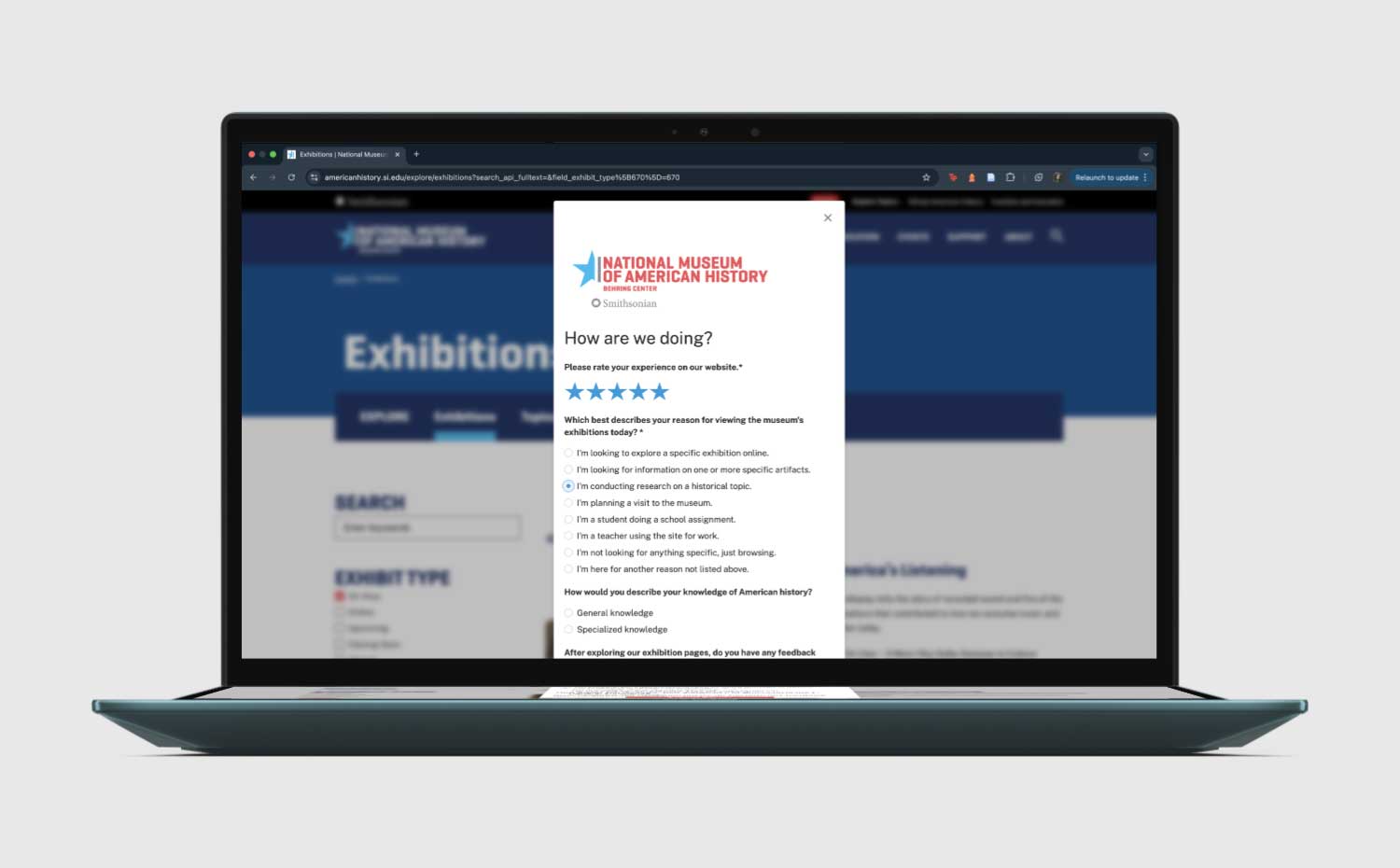
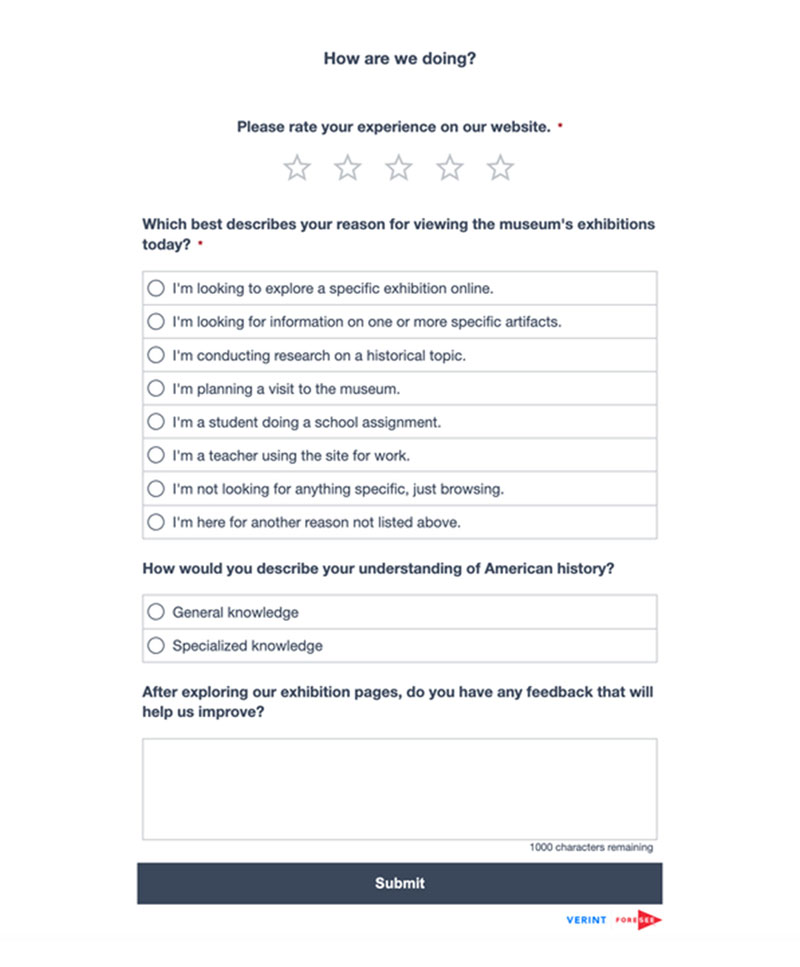
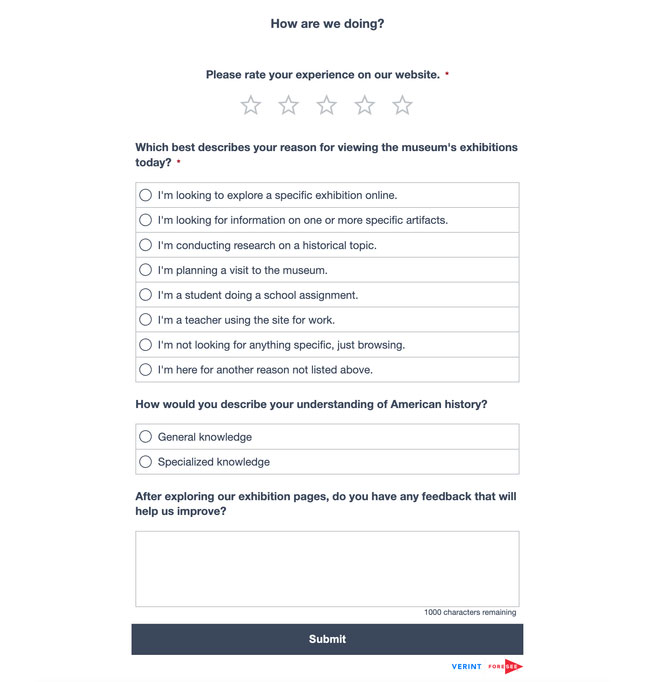
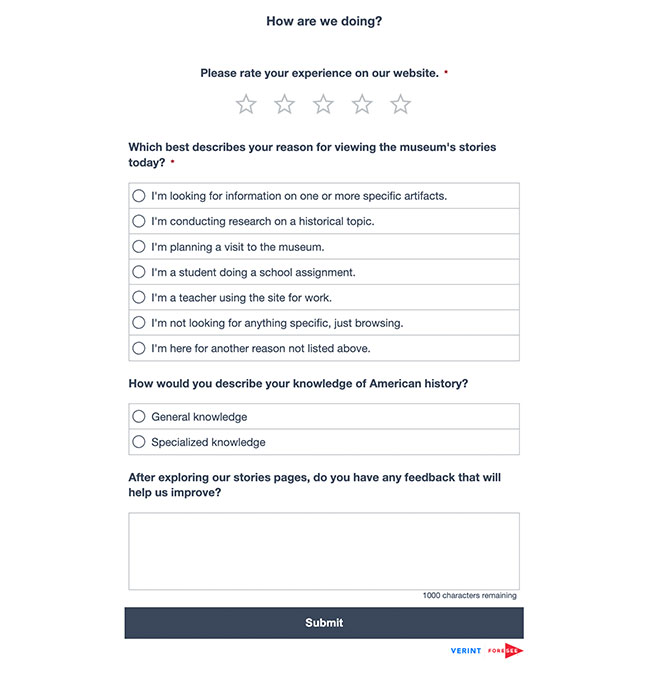
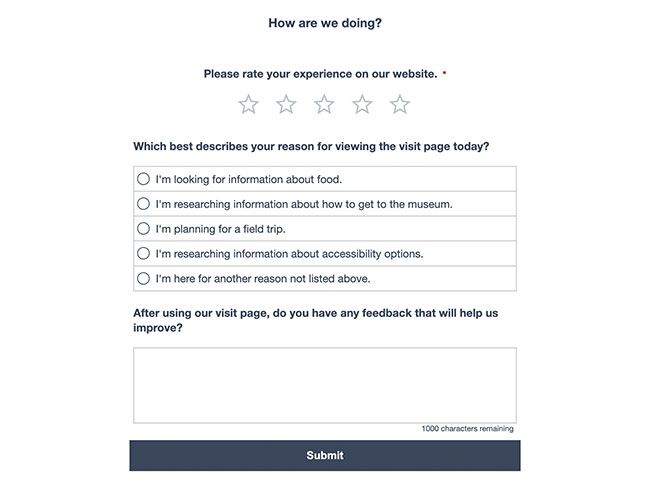
Designed page-specific surveys (Exhibitions, Collections, Visit, Stories, General) with clear, concise questions tailored to user intent. Introduced a consistent “Feedback” CTA across the site.
Process
Research
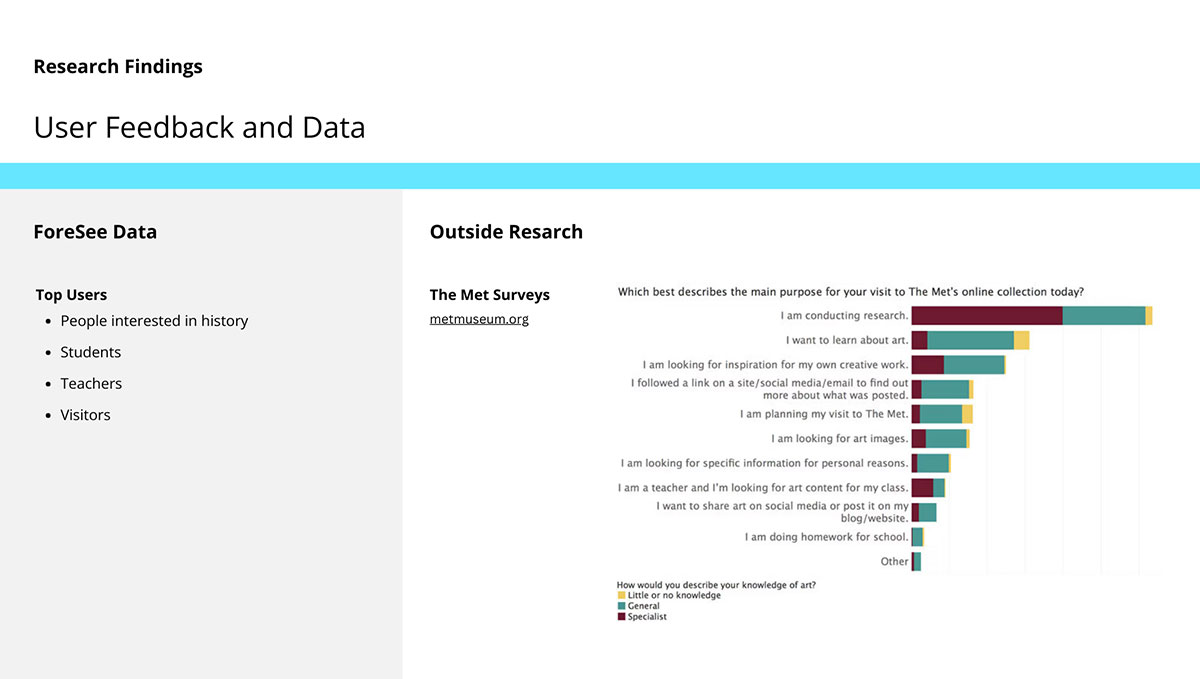
Insights from ForeSee data and The Met’s example surveys informed the structure and wording of each page-specific survey.
Ideation
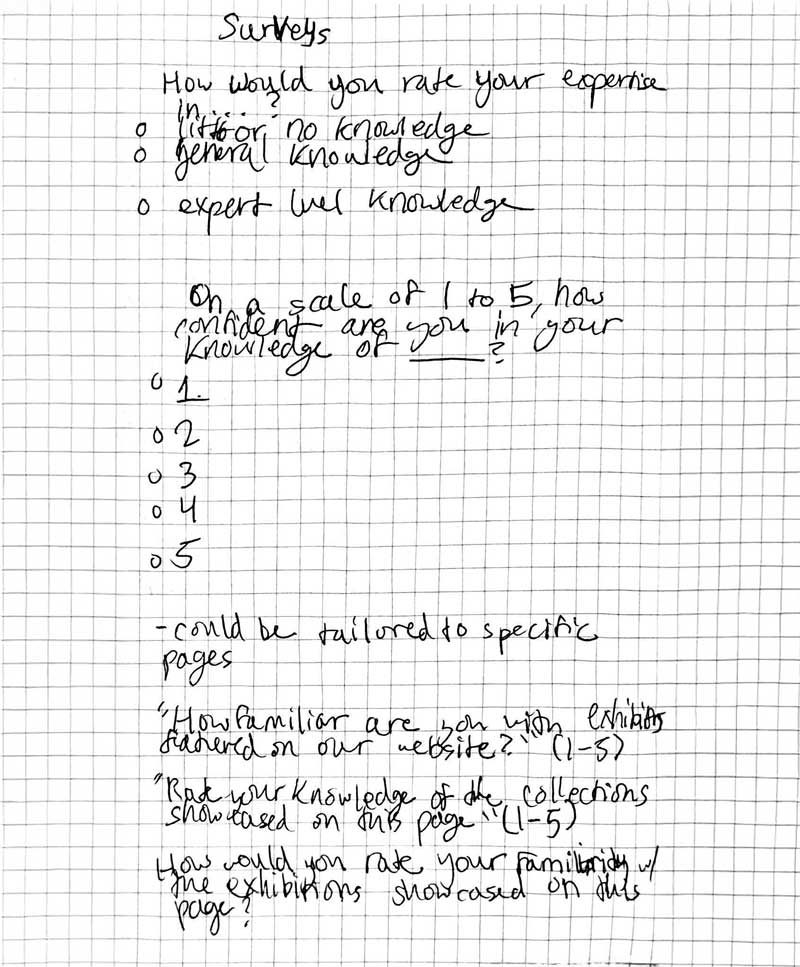
- Developed draft surveys per page type.
- Iterated question wording to reduce bias and complexity.
- Gathered internal feedback before finalizing survey content.
Collaboration
I worked with the Digital Experience team to analyze survey wording. Together, we integrated these surveys onto the site.
Definition and Design
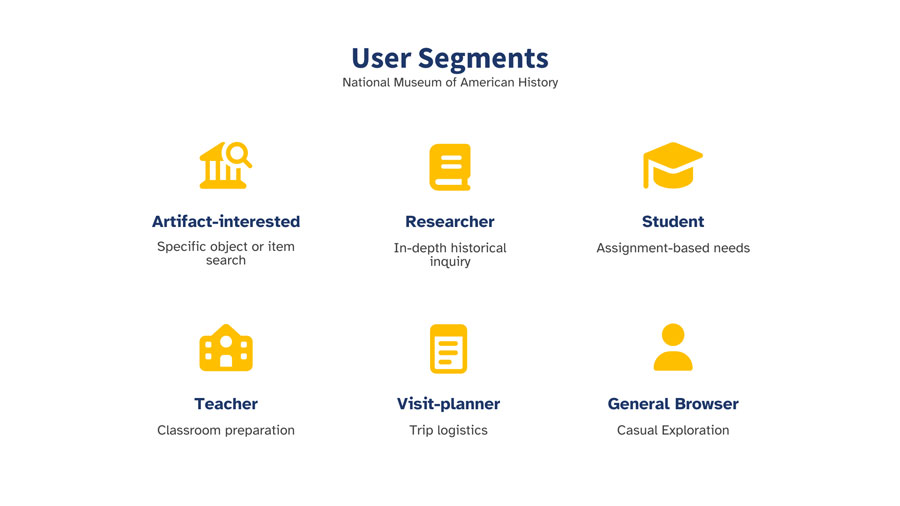
User Segmentation
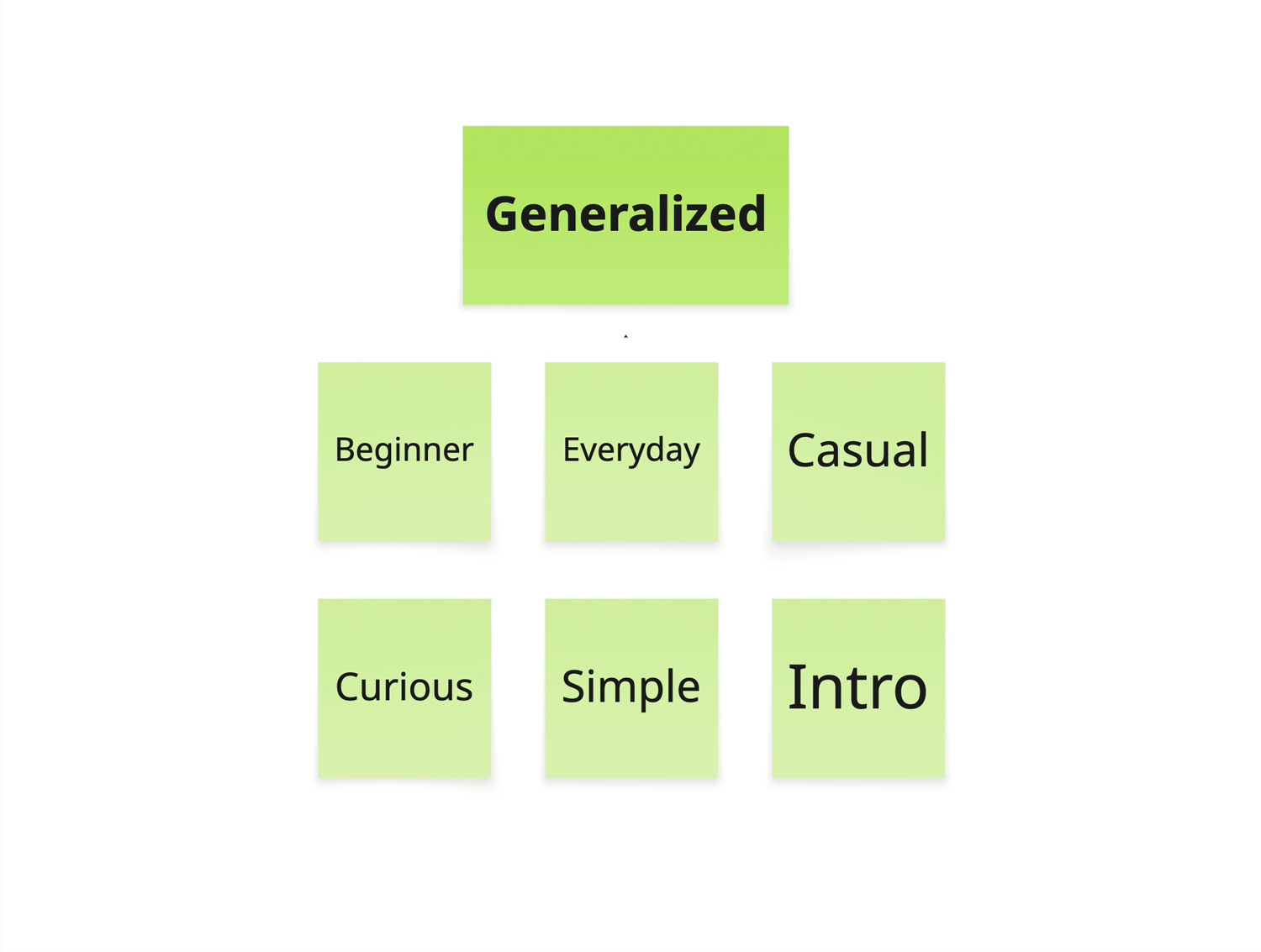
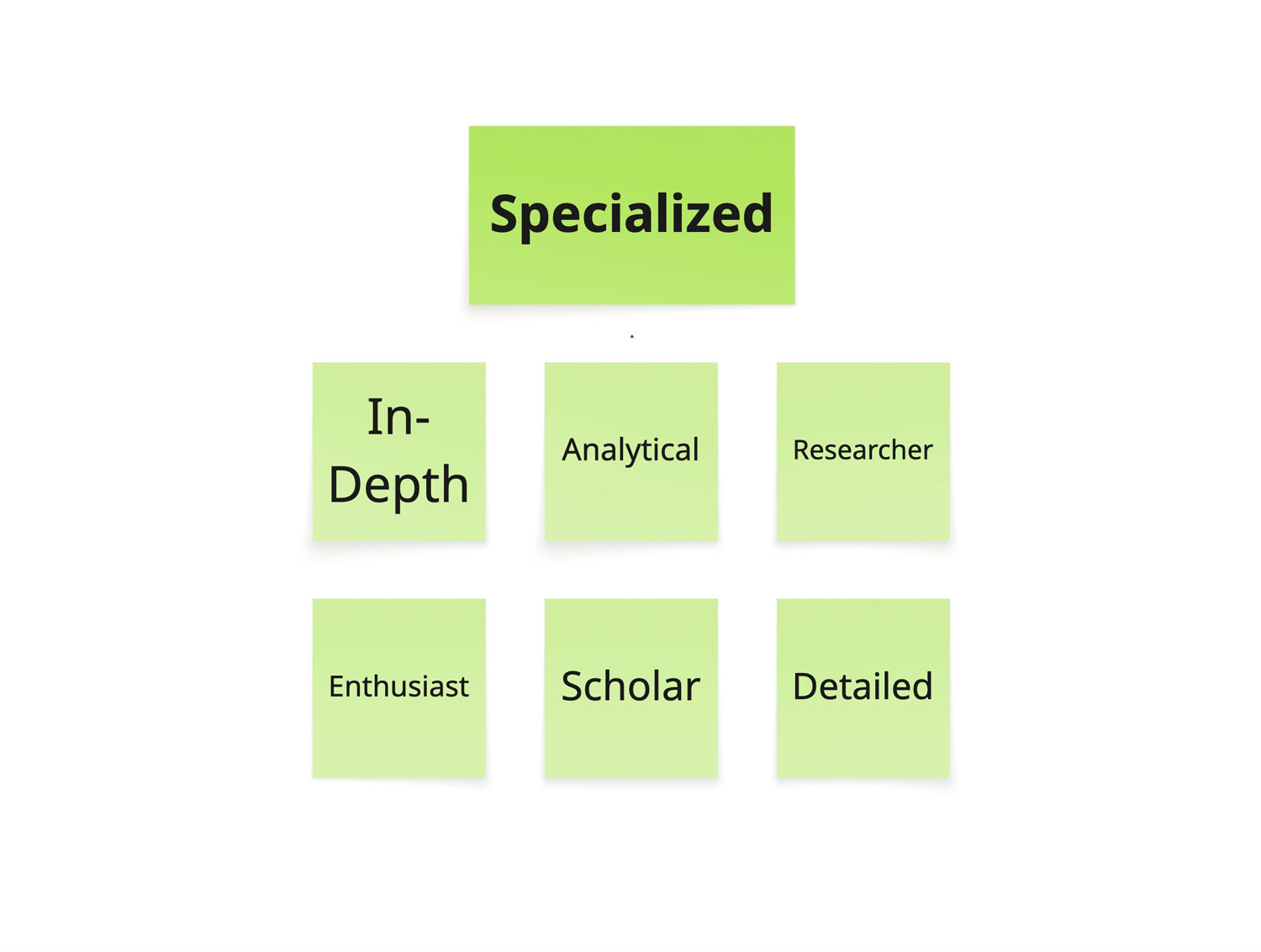
Users have diverse motivations and knowledge levels.
I designed a segmentation approach that grouped users by behavior and self-identified goals. Page-specific surveys targeted each group while keeping surveys concise and approachable.
These user segments guided the survey structure.
Encouraging Honest Feedback
Users may feel pressured to answer positively or avoid admitting gaps in knowledge.
We phrased questions to avoid judgment and reduce bias by using neutral, supportive language. This allowed users to answer honestly about their experience and knowledge.
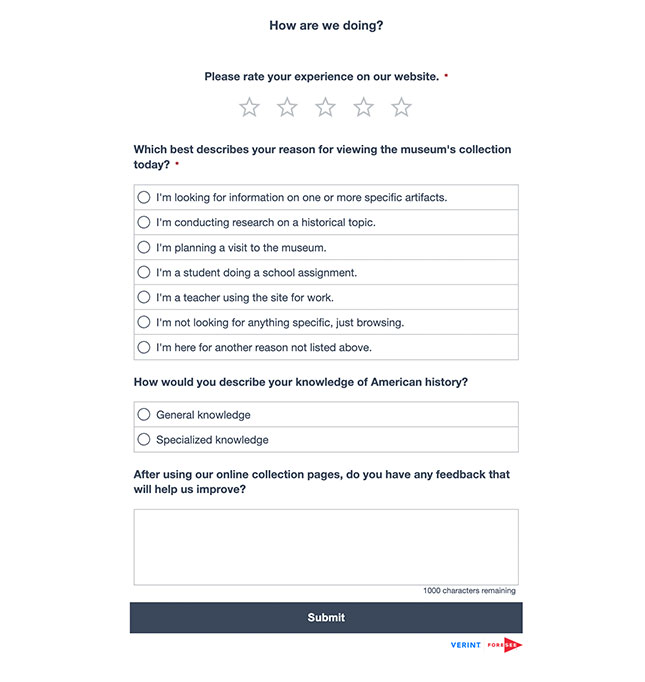
Final Surveys
Each survey is activated on their respective pages targeting more specific feedback from users.
Impact
The museum now uses a modular survey structure that can be adapted or expanded as content changes, creating a more flexible system for future research.
This project strengthened my ability to design clear, focused survey questions.
I learned how small wording choices influence user honesty and data quality, and how important it is to balance research needs with the user’s time.
It also reinforced the value of collaborating with content and research teams to create tools that scale across different parts of a large website.